The Viva Journal · 4 min read
Pain is a pattern, and patterns can change
By Andrea · October 2026
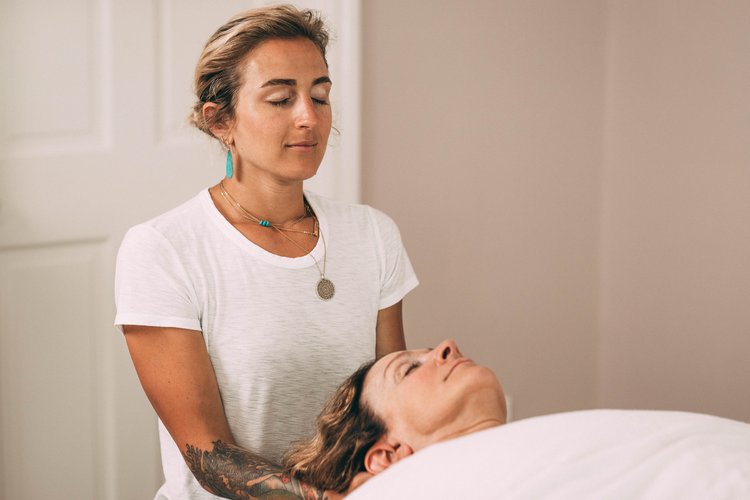
When a woman sits down with me and says my knee hurts, I almost never start with the knee. I ask her how she walks, how she sits, how she breathes, how her day goes. I ask what she was doing when it first showed up. And I watch her move, because her body usually has more to say than she does.
After twenty years of hands-on work, this is the thing I'm most sure of. Pain is rarely a single isolated problem. It's much more often a pattern.
What I mean by a pattern
A pattern is the way your whole body has organised itself around the way you live. Maybe your left hip learned to take more load years ago, after an old ankle sprain. Maybe your shoulders rounded forward from years of nursing, carrying, typing, driving. Maybe your breath moved up into your chest because life felt rushed for a long time.
Each of those adaptations made sense when it happened. Your body was being clever. But over time, one part ends up working too hard while another part sits out, and the part that works too hard eventually complains.
So when the knee hurts, it might be the knee asking for help. It might also be the hip above it, or the foot below it, or the way your ribs and pelvis stack on each other, saying something the knee has to carry.
Why this is hopeful
I find this idea so hopeful. If pain is a pattern, then it isn't a verdict. It's information. It's your body telling you how it has been getting by.
And patterns are things that can be learned, and learned differently. Your nervous system is endlessly adaptable. With the right kind of attention, it can find new ways to share the load, new ways to move, new ways to feel safe.
I want to be careful here. I'm not saying pain is imaginary, or that you can think it away, or that anyone can promise it will disappear. Pain is real and it deserves respect, and it deserves a doctor's attention when something is new, sharp, or worrying. What I am saying is that understanding your pattern gives you somewhere to start.
How we begin to read a pattern
We begin with curiosity instead of fear. A few questions I often invite women to ask themselves:
- When does it show up, and when does it ease?
- Does it change with how I breathe, or how I stand?
- What does the other side feel like?
- What was happening in my life when it started?
Then we look at how you move. How you get out of a chair, how you step, how you reach overhead. We use gentle hands-on work, fascial release and slow, mindful movement to give the body new options. And we build strength slowly, because capacity is what lets a body feel at ease again.
A common example
Here's a pattern that shows up often. A shoulder has bothered someone for years. She has stretched it, iced it and rested it. When we slow down and look at the whole picture, it turns out she barely uses her ribs when she breathes, and her upper back has almost stopped moving. The shoulder has been doing the job of three different areas. As she learns to breathe and move through her back again, the shoulder has less to carry. Not every shoulder works this way, and I'm not promising that yours will. I'm sharing it so you can see how a pattern can hide in plain sight.
You are part of your own healing
This is the part I care about most. I don't want to fix you and send you on your way. I want to teach you how your body works, so you can take part in your own healing. I want you to leave knowing what to do on a hard day, and what to do on a good one.
You are not broken. You are a body that has been adapting, and you can learn to adapt in a new direction.
This post is not medical advice, and it doesn't replace care from your doctor. If you have a recent injury, surgery or a medical condition, please talk with them before you begin any new program.
Andrea